
Complexity is definitely a pain point for any organization, and it is a true challenge for a Family Office.
In an environment where complexity often multiplies naturally, the pursuit of simplicity can become a strategic advantage.
One of my favorite quote describes perfectly my philosophy about it :
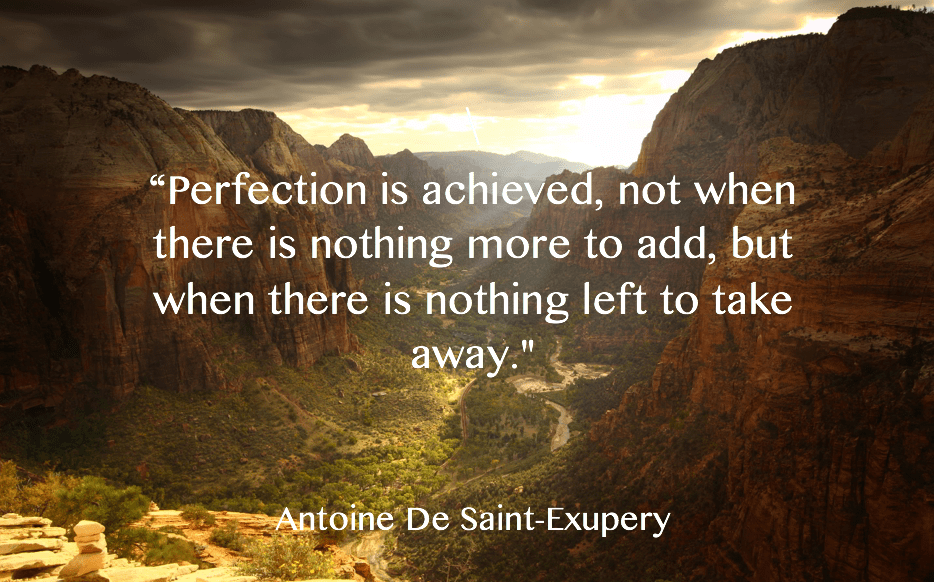
“Perfection is Achieved Not When There Is Nothing More to Add, But When There Is Nothing Left to Take Away”
Antoine de Saint-Exupery.
This is precisely how I envision simplicity. In order to achieve it, you need to begin at the top, and go all the way down your operating system, removing any friction point and useless complexity.
What is at the top? : The Family
It all starts with a family, and the very purpose of a private office is to best serve their interests and goals. Therefore, the first step would be to clearly identify the desirable outcomes.
- Long-term objectives : Vision and purpose.
- Short-term goals : The practical and daily needs of the family.
Everything we do in the family office should serve directly one or the other. If not, it is likely adding complexity.
The invisible companion
Family offices typically manage intricate structures spanning investments, estate planning, philanthropy, and family governance.
As wealth grows and generations expand, complexity compounds – often invisibly until it begins creating friction.
There is a way to simplify. Here is an easy, step by step path to follow :
1. Investment Structure Streamlining
Rather than accumulating an ever-expanding portfolio of managers and assets, consider:
- Consolidating relationships with fewer, higher-quality partners
- Focusing on core competencies and transparent strategies
- Eliminating redundant holdings that create overlap without diversification benefits
Bonus : Consider outsourcing! Learn more : In or Out , OCIO,
2. Technology and Reporting Integration
- Replace multiple disconnected systems with integrated platforms
- Create unified reporting that shows what matters most
- Automate repetitive processes to reduce operational complexity
Bonus : Read Simple’s report on FO software : HERE , and read my article about Building the best classification system HERE, don’t forget to document your processes!
3. Governance Simplification
- Distill decision-making processes to their essential elements
- Develop clear delegation frameworks
- Create purposeful meeting structures that maximize engagement
Bonus : Learn about the 2/2/2 rule, and read HBS advise on meetings,
4. Estate Planning Clarity
- Design structures that achieve objectives without unnecessary complexity
- Regularly review and potentially consolidate older entities
- Ensure plans remain comprehensible to all stakeholders
Bonus : Think about benchmarking, learning how others do it. Speak your will, prepare the next generation, and start now!
5. Focus on Information Curation
Instead of generating exhaustive reports that overwhelm with data, develop concise dashboards that highlight only the most critical metrics. Work with principals to identify their true information needs versus wants.
This might mean replacing lengthy monthly reports with one-page visual summaries that spotlight exceptions and action items while providing access to details only when needed.
The Benefits of Simplification
Removing unnecessary complexity doesn’t just reduce cognitive load—it creates tangible advantages:
- Improved agility and decision-making
- Enhanced family understanding and engagement
- Reduced operational costs and friction
- Better risk management through transparency
Consider regular « complexity audits » where you systematically examine each area of the family office with the question:
« What can we remove while maintaining or enhancing our objectives? »
Using this article and my favorite quote (written by a human), I asked an AI to write a case study to visualise the benefits.
The case study includes:
- Background context on a typical multi-generational family office
- Specific operational challenges they faced due to complexity
- Implementation details for each simplification strategy
- Quantified results showing the business impact
- Key insights they learned through the process
Read it here and tell me what you think about it :
 Elodie Rojas
Laisser un commentaire